


Will This EV Charger Work With My Car? A Compatibility Guide for Filipino EV Owners

You're considering an EV charger, but before anything else, you have one question: will it actually work with my car?
It's the right question to ask first. Buying a charger that doesn't fit your EV is an expensive mistake — and unfortunately, not all chargers work with all EVs. The good news for Filipino EV owners is that the Philippine market has largely standardized on one connector type, which makes compatibility simpler than it used to be. But there are real exceptions, edge cases, and details worth knowing before you buy.
This guide walks through the compatibility picture for the major EV brands sold in the Philippines in 2026. By the end, you should know whether a Type 2 portable EV charger will work with your specific car — and what questions to ask if you're not sure.
Let's get into it.
The connector basics
Before going brand by brand, here's the foundation everything else builds on.
Every EV has a charging port. The shape of that port — called the connector type — determines what chargers will physically fit it. There are several connector standards used globally, but only a few that matter for Filipino EV owners.
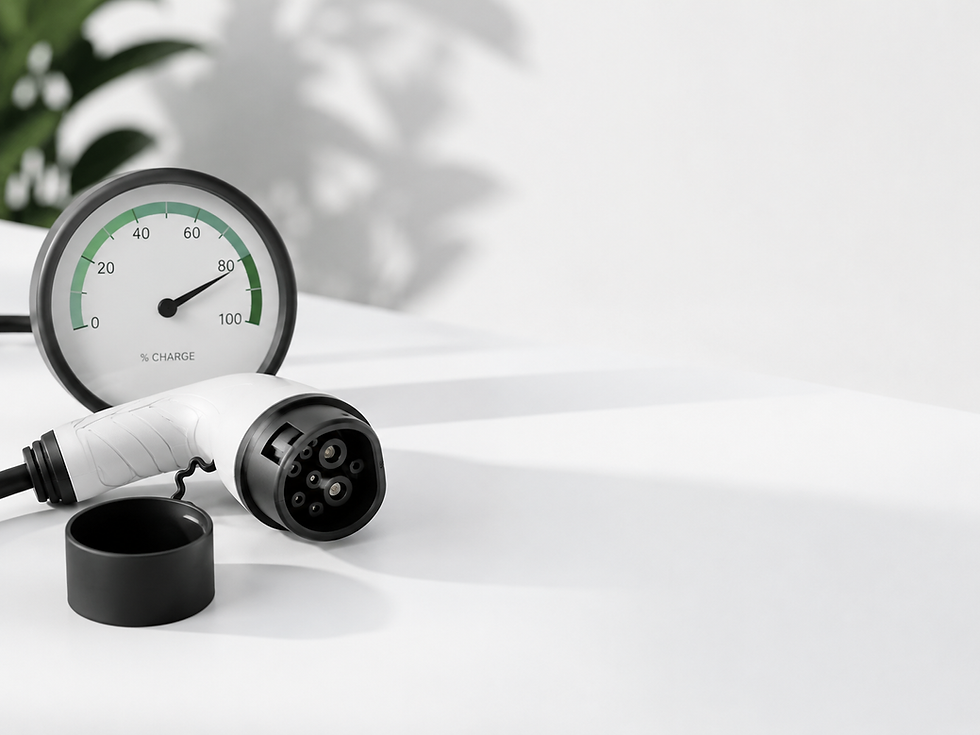
Type 2 (Mennekes) is the dominant AC charging standard across Asia, Europe, and Australia. Almost every EV sold through official Philippine market channels uses Type 2 for AC home charging. This is the standard portable EV chargers like ours are built around.
CCS Type 2 is essentially Type 2 with an additional DC fast charging section below it. The upper portion is the same Type 2 you'd use at home — so any Type 2 home charger works fine with CCS Type 2 vehicles.
Type 1 (J1772) is the older standard used primarily in North America. You'll occasionally see it on imported vehicles or older Filipino EVs.
NACS (North American Charging Standard) is Tesla's proprietary connector, increasingly common on US-market vehicles. Tesla vehicles imported from the US use this connector, which does not natively fit Type 2 chargers.
GB/T is the Chinese domestic standard. Grey-market vehicles imported directly from China sometimes have this connector.
For most Filipino EV owners shopping through official dealerships, the answer is simple: your car uses Type 2 (or CCS Type 2), and a Type 2 portable charger will work. The complications come from imported vehicles, which we'll cover specifically.
Tesla compatibility
Tesla is one of the most asked-about brands in Filipino EV circles, partly because Tesla compatibility has historically been confusing. Let's clarify it.
Tesla Model 3 and Model Y (Philippine market)
For Tesla vehicles sold through Asian distribution channels — which includes the Philippine market — both the Model 3 and Model Y use CCS Type 2 connectors. The upper section is a standard Type 2 inlet that works with any Type 2 home charger.
Charging speed details:
The onboard AC charger in these models can handle up to 7.4 kW on single-phase Filipino home power
A quality portable Level 2 charger delivers up to 7.2 kW
Real-world charging speed at home matches what Tesla's own Wall Connector delivers on single-phase circuits
Charging time estimates:
Model 3 RWD (~57.5 kWh battery): around 8 hours for full 0–100%
Model 3 Long Range (~78 kWh battery): around 10–11 hours for full 0–100%
Model Y RWD: around 8–9 hours
Model Y Long Range (~78 kWh battery): around 10–11 hours
Both are comfortably overnight charging.
The grey-market Tesla situation
Here's where compatibility gets nuanced. Some Filipino Tesla owners imported their vehicles privately from the United States or Canada — and US-market Teslas use the NACS connector, not Type 2.
If you bought your Tesla from a grey-market importer or brought it home yourself from North America, your Tesla may have NACS instead of Type 2. A standard Type 2 portable charger will not physically fit a NACS port without an adapter.
How to tell which connector you have: look at the actual charging port on your Tesla. A CCS Type 2 port has a clear two-section design — the Type 2 inlet on top and a CCS DC charging section below. A NACS port is smaller, with a single rounded rectangular shape. If you're unsure, send a photo to a knowledgeable EV charging seller before buying anything.
The honest takeaway: Tesla vehicles sold officially in the Philippines work with Type 2 chargers. Tesla vehicles imported from the US may not, depending on the model year and configuration. Verify before you buy.
BYD compatibility
BYD has the largest Philippine EV market share by volume, with multiple models across both pure EV and plug-in hybrid (PHEV) categories. The good news: BYD has standardized on Type 2 across their lineup.
BYD pure EVs
BYD Atto 3, Seal, Dolphin, Sealion 7, Han, and other pure EV models all use Type 2 / CCS Type 2 connectors. Any Type 2 portable charger works with these vehicles.
Charging time estimates at full 7.2 kW:
BYD Dolphin (~44.9 kWh battery): around 6–7 hours
BYD Atto 3 (~60.5 kWh battery): around 8–9 hours
BYD Seal (~82.5 kWh battery): around 11–12 hours
BYD plug-in hybrids (PHEVs)
BYD Sealion 5 DM-i, Sealion 6 DM-i, Seal 5 DM-i, and Tang DM-i are plug-in hybrids that also use Type 2 connectors. Compatibility is straightforward.
However, there's a meaningful nuance for PHEV owners: PHEV batteries are smaller, and their onboard AC chargers are typically slower than pure EV onboard chargers. For example:
BYD Sealion 5 DM-i: ~3.3 kW onboard AC charger
BYD Sealion 6 DM-i: ~3.3 kW onboard AC charger
BYD Tang DM-i: ~7 kW onboard AC charger
What this means practically: your portable Level 2 charger will deliver power up to your car's onboard charger maximum. For most BYD PHEVs (except the Tang DM-i), the car limits charging to around 3.3 kW regardless of what the charger is rated to deliver. This isn't a flaw in the charger — it's the way PHEVs are designed.
A note on bundled BYD chargers
BYD's premium models (Tang DM-i, eMAX 7) come with a 7 kW wall-mounted home charger included in the purchase. For owners of these specific models, a portable charger doesn't necessarily charge faster at home — both options top out at 7 kW. The portable's value for these owners is portability for travel and a backup option.
Entry and mid-tier BYDs (Atto 3, Dolphin, Seal, most Sealion variants) typically come only with a slower 2.2–3.3 kW portable cable. For these owners, upgrading to a 7.2 kW portable Level 2 charger can be a meaningful speed upgrade — roughly 2 to 3 times faster than the bundled cable.
MG compatibility
MG has been growing in the Filipino EV market, particularly with the MG ZS EV, MG4 EV, and other models.
MG ZS EV, MG4 EV, and other MG electric models sold through official Philippine market channels use Type 2 / CCS Type 2 connectors. Type 2 portable chargers are fully compatible.
Charging time estimates at full 7.2 kW:
MG ZS EV (~50 kWh battery): around 7–8 hours
MG4 EV (~64 kWh battery): around 8–9 hours
MG vehicles are straightforward from a compatibility standpoint — no major caveats for Philippine market owners.
VinFast compatibility
VinFast entered the Philippine market with several models, and compatibility varies by trim.
Verified compatible models
VinFast VF MPV 7 (the seven-seater electric MPV) uses CCS Type 2 with a 6.6 kW onboard AC charger. Type 2 portable chargers work cleanly. Expect around 9–10 hours for a full charge on the 60.13 kWh battery.
VinFast VF7 and VF7 Plus (the SUV models) use CCS Type 2 in the Philippine market. The VF7 Plus has up to 11 kW onboard AC charging on 3-phase power, but on Filipino single-phase home circuits, both PC280-class portables and the car's electronics limit charging to around 7 kW — which is more than adequate for overnight charging.
A note on the VF3
VinFast VF3 (the compact city EV) is more complicated. Some VF3 trims and market variants have used non-standard connector configurations. If you own or are considering a VF3, send a photo of your specific car's charging port to your charger seller before purchasing any equipment. The connector shape will tell you immediately whether a standard Type 2 portable charger fits.
For all VinFast models, an additional consideration: VinFast offers free charging at V-Green stations until March 2029, which complements home charging nicely. A portable Level 2 charger handles your home and travel charging while V-Green covers public charging needs.
Jaecoo compatibility
Jaecoo, the premium sub-brand of Chery, has been growing quickly in the Filipino EV market with the J7 PHEV, J7 EV, and EJ6 models.
Jaecoo J7 PHEV uses Type 2 with approximately 6.6 kW onboard AC charging. The PHEV's smaller battery (~18.3 kWh) means a full charge takes around 3 hours at PC280-class portable speed.
Jaecoo EJ6 (the pure EV SUV) uses CCS Type 2 with a 6.6 kW onboard AC charger and a 69.77 kWh battery. Expect around 10–11 hours for a full charge.
Both Jaecoo models are fully compatible with standard Type 2 portable chargers.
Hyundai and Kia compatibility
Hyundai Ioniq 5, Ioniq 6, and Kona Electric sold in the Philippines all use CCS Type 2. Type 2 portable chargers work without complications.
Kia EV6, EV5, and Niro EV similarly use CCS Type 2 with no compatibility issues.
Note that Hyundai and Kia EVs often have larger onboard AC chargers (some can handle 11 kW on 3-phase power), but on Filipino single-phase home circuits, both the car and a quality portable Level 2 charger will operate at around 7.2 kW maximum.
GAC Aion compatibility
GAC Aion Y Plus and other GAC Aion models sold through official Philippine channels use Type 2 connectors. Compatibility with Type 2 portable chargers is straightforward.
The grey-market complication
Several EV brands available in the Philippines are exclusively or primarily grey-market imports — meaning they weren't officially launched here through manufacturer-authorized dealers, and units in the Philippines came through private importation.
The most notable example: the Toyota bZ4X, which is not officially sold by Toyota Philippines as of 2026. Filipino bZ4X owners typically imported their vehicles from one of three regions:
Asian/European/Australian markets: These versions use Type 2 connectors and work with Type 2 portable chargers
North American market (US/Canada): These versions use the J1772 connector, which does not natively fit Type 2 chargers — you'd need a J1772-to-Type 2 adapter
Domestic Chinese market: Some versions use GB/T connectors, also not natively compatible
If you have a grey-market EV — any model not officially distributed in the Philippines — the connector type depends entirely on which market your vehicle came from. Don't assume compatibility based on the brand or model alone. Verify the actual connector before purchasing equipment.
Other brands worth mentioning
Many other EV brands appear in the Filipino market in smaller numbers. As of 2026, the following also use Type 2 / CCS Type 2 and work with Type 2 portable chargers:
BMW (iX, i4, iX3, and other electric BMW models)
Mercedes-Benz EQ lineup
Audi e-tron series
Porsche Taycan
Volkswagen ID series
Volvo XC40 Recharge, EX30, EX90
Geely Geometry
Chery eQ models
Maxus EV models
This isn't an exhaustive list, but it captures most of what Filipino buyers encounter. The general rule: if your EV was officially sold through Filipino dealerships and isn't a Tesla US import, you almost certainly have Type 2 compatibility.
What "compatible" really means
A few practical notes that don't always come up in compatibility discussions:
Compatible doesn't mean instant 7.2 kW charging. Connector compatibility is just the first step. Actual charging speed depends on three things: the car's onboard AC charger maximum, the circuit you're plugged into, and the charger's rated output. A 7.2 kW portable charger on a 7 kW onboard charger feeding through a 32A circuit gives you about 7 kW real-world charging. Replace any of those with a smaller number and your charging slows accordingly.
Compatible requires proper grounding. Whatever EV you have, the home charging setup must be properly grounded for safe operation. This isn't optional — modern EVs and modern chargers both refuse to operate without a verified ground connection. This applies universally regardless of brand or model.
Compatible doesn't guarantee a perfect fit. Some EV connectors have tight tolerances, and even between technically compatible Type 2 ports, slight build variations can occasionally cause connection issues. If you're buying a charger for a premium EV (especially Tesla, where build tolerances have historically been tight), it's worth doing a physical test before relying on it.
How to verify compatibility before buying
If you're not sure about your specific vehicle, three practical steps:
1. Photograph your charging port. Look at your car's actual charging port — not the manual or the manufacturer website, but the physical port. Take a clear photo. The connector shape will tell a knowledgeable seller exactly what you have.
2. Check your owner's manual. Most EV manuals specify the AC charging connector type (often listed as "Type 2," "Mennekes," or "IEC 62196"). If your manual confirms Type 2, you're good with a Type 2 portable charger.
3. Send the photo to your charger seller before purchasing. Any reputable EV charger seller in the Philippines should be willing to verify compatibility from a photo of your charging port before you commit to buying. If a seller refuses to do this verification, that's a yellow flag — they may be more interested in the sale than in your charging actually working.
At JSD Online, we run this verification step for every customer before any order is finalized. It's standard service, not an upsell. If your car turns out to have a non-Type 2 connector, we'll tell you that honestly so you can find the right equipment elsewhere — sometimes that means an adapter, sometimes it means a different type of charger entirely.
Common compatibility questions
"Will the included plug heads work with my home outlet?"
The plug heads on a portable charger connect to your home outlet — separate from the charging connector that plugs into your car. Most quality portable chargers include Schuko and CEE32 plug adapters, which cover most Filipino home outlet configurations. If your home has an unusual outlet type, you may need a separate plug adapter.
"What about charging speed on PHEVs versus pure EVs?"
PHEVs have smaller batteries but also smaller onboard AC chargers. A PC280-class portable charger rated at 7.2 kW won't make your PHEV charge faster than its onboard charger allows — typically 3.3 kW for most BYD PHEVs, around 6.6 kW for higher-tier models. The portable charger is still useful for PHEVs (better build quality, travel-ready features), but the speed advantage over a stock cable depends on the specific car.
"Are there EVs in the Philippines that absolutely won't work with a Type 2 portable charger?"
A few:
Tesla vehicles imported from the US with NACS connectors (need adapter)
Older Nissan Leaf models with Type 1 (J1772) connectors (need adapter)
Older Mitsubishi i-MiEV models with Type 1 connectors (need adapter)
Some grey-market Chinese-domestic-spec vehicles with GB/T connectors (need adapter)
Some specific VinFast VF3 trims (verify before buying)
Outside of these specific cases, almost every other EV sold in the Filipino market in 2026 uses Type 2 / CCS Type 2 and works with Type 2 portable chargers.
Practical next steps
If you've read through all this and you're still not 100% sure whether your specific EV is compatible, here's the simplest path forward:
Photograph your car's charging port
Note your EV's brand, model, year, and where you bought it (official Philippine dealer or imported from another market)
Send both to a knowledgeable EV charger seller in the Philippines
A good seller will give you a clear yes/no answer with reasoning. If they hesitate, ask more questions, or recommend an adapter, those are all reasonable responses — better than a vague "should be fine" that turns into a returned product later.
Compatibility shouldn't be a guessing game. With a quick verification before purchase, you can be confident your charger and your car will work together for years.


Comments